

Invoicing and charging setup was fragmented and confusing to configure
No way to export invoice data without custom development work
Sending files to accounts software meant manual exports each time
Every customer needed bespoke setup just to get their charge data out
Automations trigger a file export the moment an invoice changes stage
Invoice PDFs email out automatically to a set address
Bespoke CSV or XML files send to email or SFTP, on schedule
Charge data also available via pre-built reports or the API
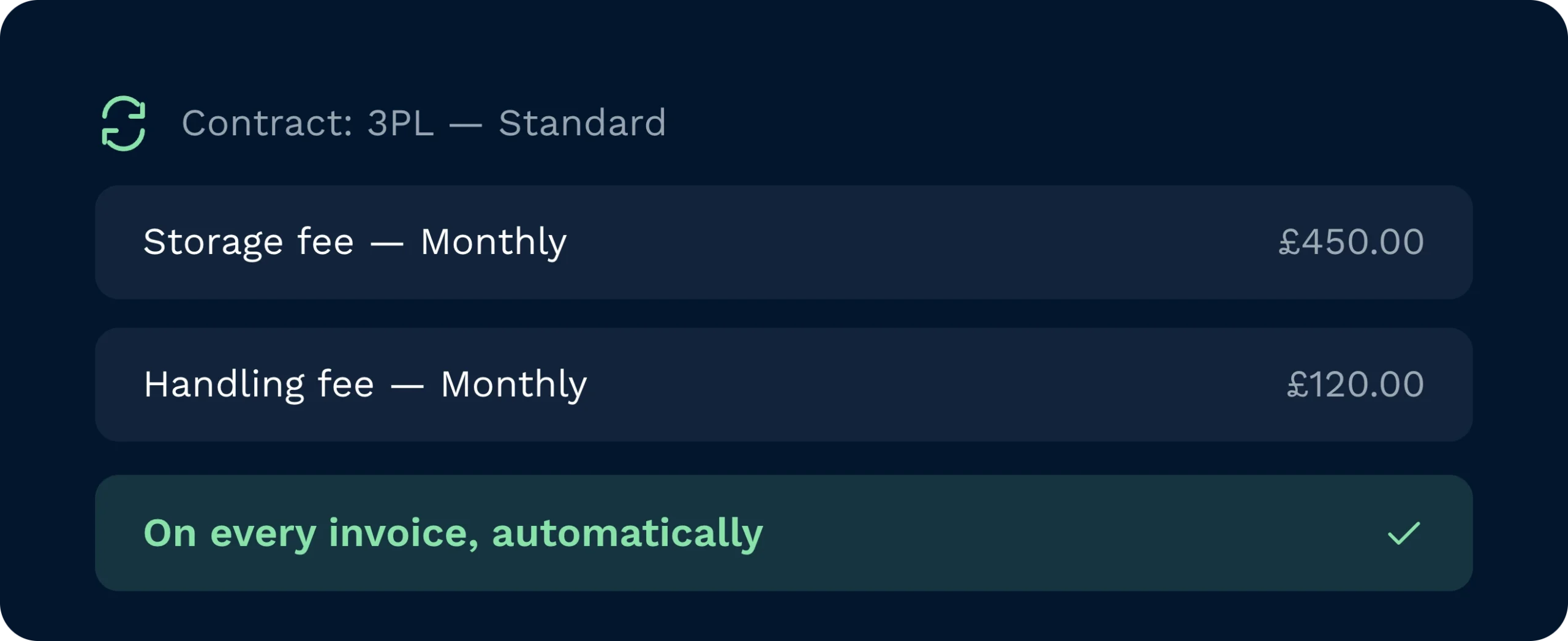
Scheduled charges fire on the configured frequency, so fixed contract fees appear on every invoice without anyone needing to remember to add them.
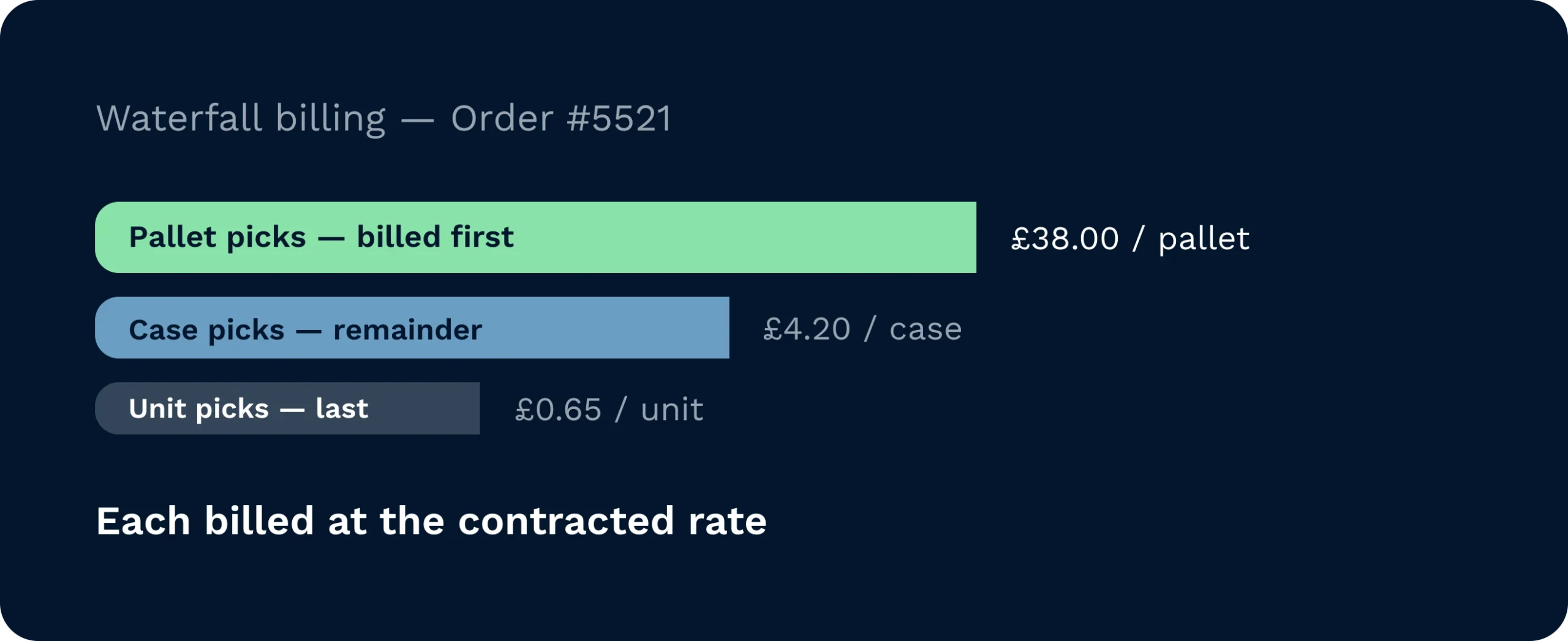
Waterfall logic charges at the highest unit of measure first, so pallet picks, case picks, and unit picks are each billed at the rate the contract specifies.
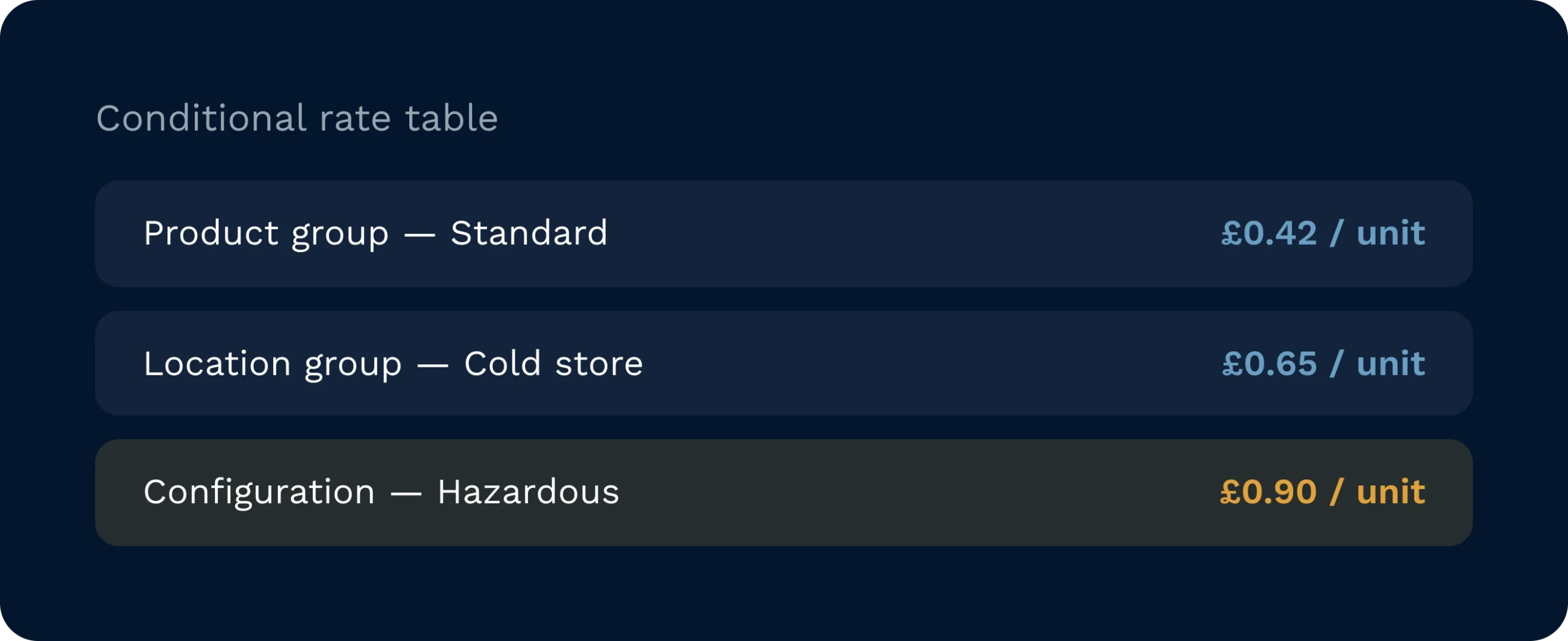
Conditional charges apply different rates by product group, location group, or configuration type, so every line on the invoice reflects the actual commercial agreement.
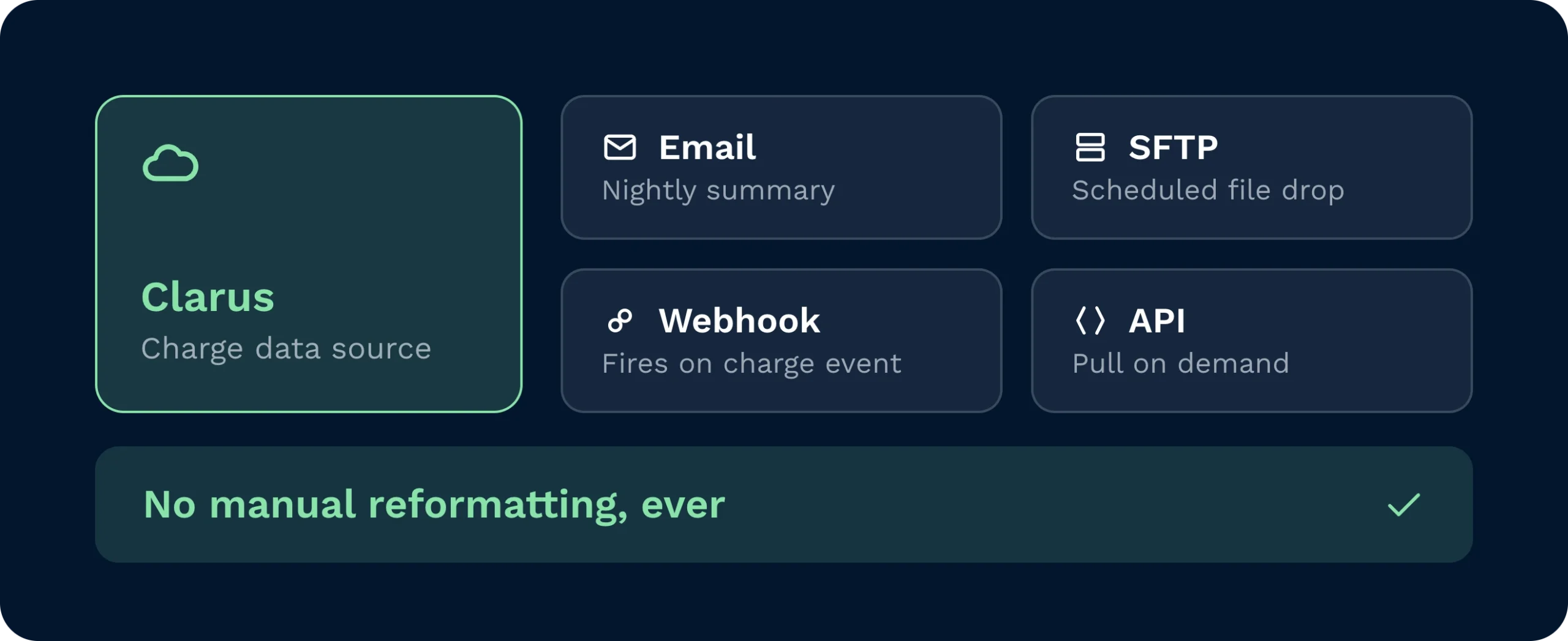
Charge data flows automatically to accounting platforms via email, SFTP, webhook, or API, removing manual reformatting and the risk of late or missing invoice data.
Clarus’s charging engine covers the full range of 3PL billing: conditional rates by product group, location group, or configuration type; hierarchical waterfall logic from pallet to unit; and scheduled recurring charges for fixed contract fees. Every charge type flows onto the same invoice, configured once and applied automatically.
Invoicing automations then handle the output: event-triggered PDF emails, structured CSV or XML exports for accounting platforms, scheduled bulk data exports, and direct API access for ERP integration.

Set up conditional rates, recurring fees, and waterfall rules once on the charge card, and Clarus applies them correctly to every invoice without manual adjustment.

Hierarchical pick charging ensures pallet, case, and unit activity is billed at the correct contracted rate, removing the need for end-of-period manual corrections.

Invoicing automations deliver structured charge data directly to Sage, Xero, Business Central, or SAP on a schedule or event trigger, cutting manual export work entirely.
Add a scheduled charge directly to the charge card with a code, name, description, quantity, price, nominal code, initial charge date, and frequency. Options are daily, weekly, monthly, or end of window. Clarus fires the charge automatically from that point forward with no further manual input.
Clarus handles this automatically. A monthly charge will appear only once regardless of how many weekly windows fall within that month, and a weekly charge will fire at the correct interval within a monthly window.
When a pick is charged, Clarus applies the pallet rate to any full pallet quantities first, then the case rate to remaining full cases, then the inner rate, then the unit rate for any residual quantities. The charge card defines the rate at each tier, and Clarus cascades through them automatically.
Yes. Conditional charges let you define rates by location group, product group, and configuration type on a single charge card. Clarus reads the relevant attributes on each transaction and applies the correct rate without any manual calculation.
Confirmed integrations include Xero, Sage 50, Microsoft Business Central, and SAP. Clarus maps to a customer-provided template and outputs structured CSV or XML files. Bulk scheduled exports can be sent to SFTP or email, and charge data is also accessible via the Clarus GraphQL API for direct ERP integration.
Email and SFTP automations are configured within Clarus by a billing admin with no development work required. API integration for direct ERP connectivity requires technical resource on the customer side, but Clarus provides full GraphQL access to charge line, charge basket, and charge card data.
¿Todavía indeciso? Dedica cuatro minutos a ver cómo Clarus se encarga de recepción de mercancías, preparación de pedidos y expedición. Ya verás por qué Nuestros clientes siguen diciendo ”sí” a nuevos contratos.