

The assistant didn’t know each client’s terms, units or cut-offs
You explained the same background in every conversation
New tariffs were keyed into charge cards by hand
Document templates needed someone who could write HTML
Each agent’s job description holds the client’s terms and rules
Pick the agent and ask, with no background needed
Attach a tariff PDF and the charging agent proposes the set-up
Attach a mock-up and the template agent builds the dispatch note
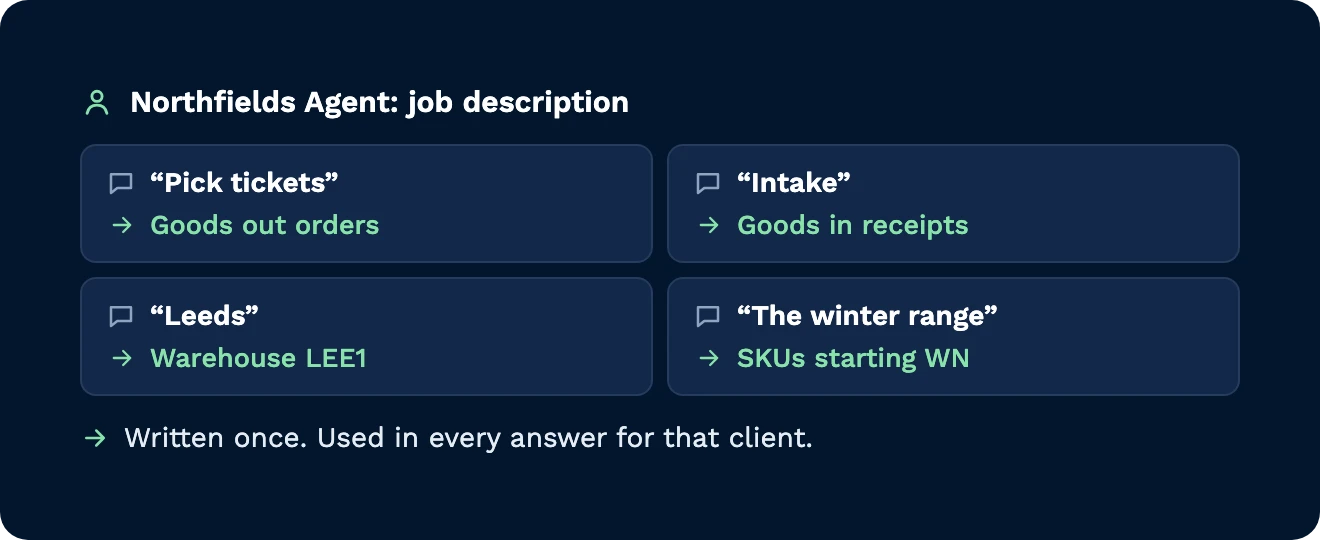
Tell the agent that “pick tickets” are goods out orders, “intake” is goods in and the winter range is SKUs starting WN. It uses that every time, and answers in the units the client uses.
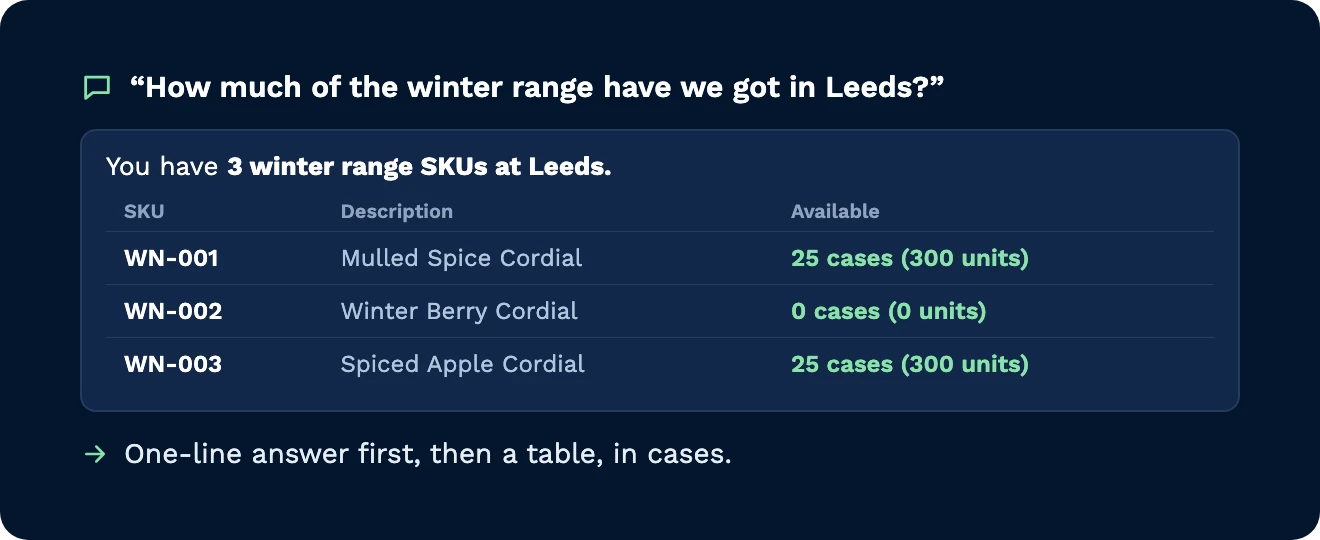
Set the house style in the job description: lead with a one-line answer, use a table for longer lists. If something isn’t in Clarus, it says so plainly rather than estimating.
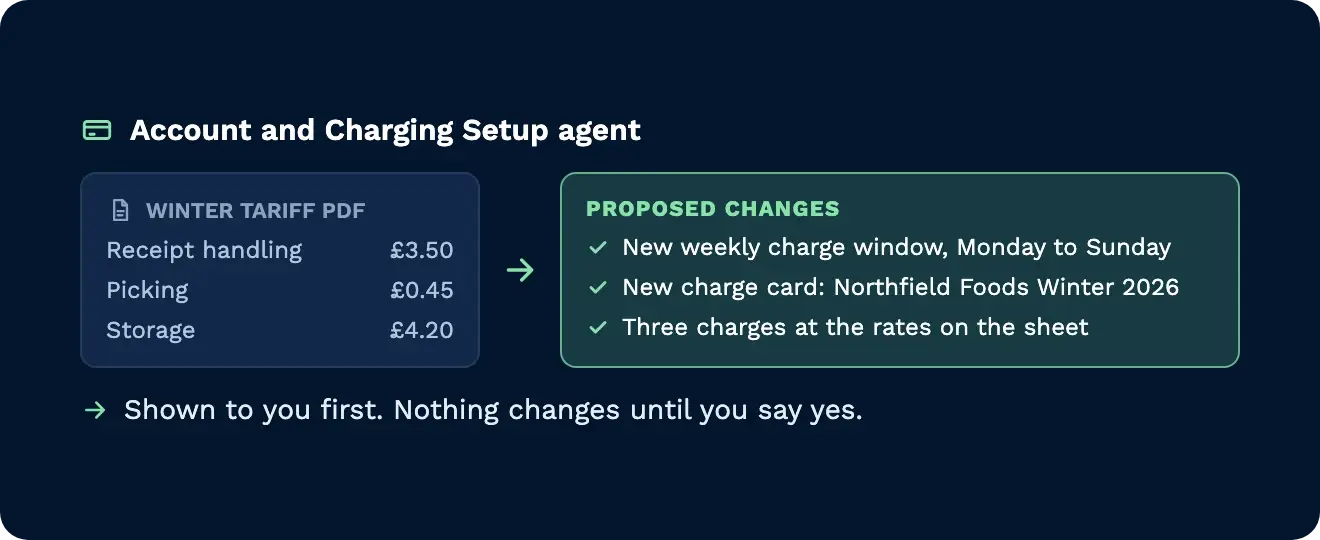
The Account and Charging Setup agent reads the tariff, then proposes the charge window, charge card, prices and account link. It shows you a summary and asks before it creates anything.
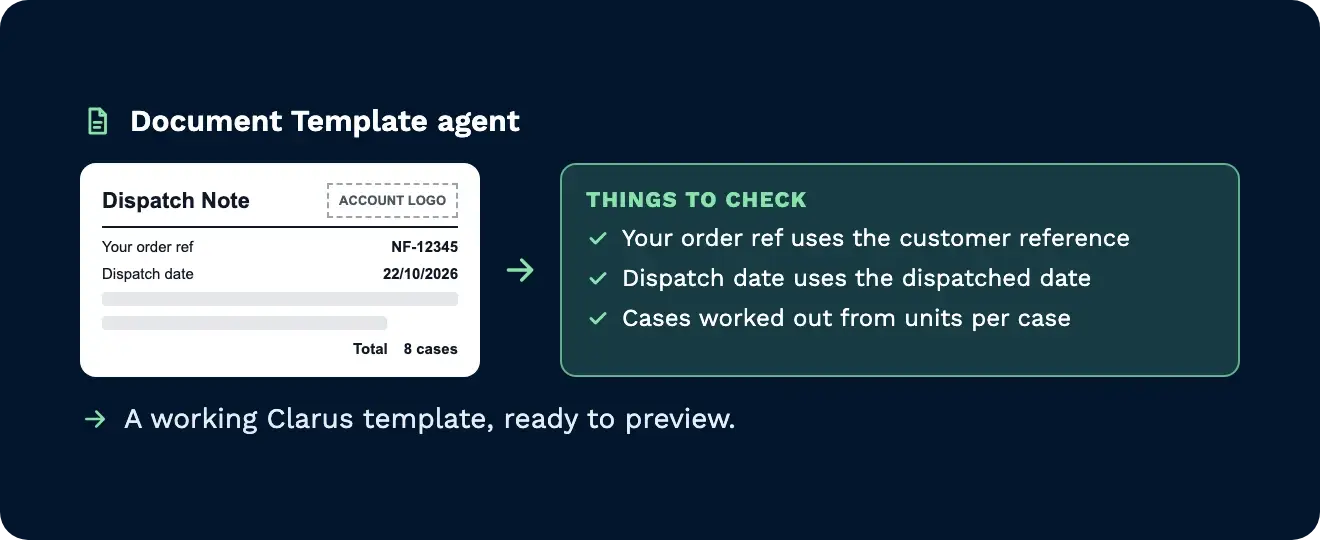
The Document Template agent turns a customer’s mock-up into a working Clarus template. It lists the assumptions it made for you to check, then creates and links the template when you say go.
Write a job description once and the agent uses it every time. Ask a Northfield agent how much of the winter range is at Leeds and it knows which SKUs, which warehouse, and to answer in cases. Switch to a built-in specialist for setup work. Attach a tariff and it proposes the charge card, charges and billing window, then asks before it changes anything.

Give each client their own agent. It knows their order references, warehouse names, units and cut-offs, so you get answers without explaining the account each time.

New tariff in? Attach it and the charging agent proposes the charge card, charges and billing period for you to approve.

Client mock-ups and import files no longer wait for a specialist. The template and import agents do the first build, and you check and tweak.
A version of Clarus AI with its own name, model and job description. Administrators create them in Settings, under Agents, and you can have as many as you like.
Anything your team knows that the AI doesn’t: client terminology, warehouse names, order reference formats, units, cut-off times, who it’s talking to and how to format answers.
The Warehouse Assistant (the default), plus agents for account and charging setup, document templates and import configuration. More are on the way.
Ask it to show you a summary first. In our demo the charging agent listed every change and asked “shall I go ahead?” before creating anything.
No. The Document Template agent writes the template from your mock-up and lists any assumptions for you to check. You can preview it and keep refining it.
Yes. Agents can be connected to email, Slack, Teams and WhatsApp, with only the contacts you approve.
Yes. They run through Clarus AI and use the monthly allowance in your plan.
Fortsatt usikker? Bruk fire minutter på å se Clarus håndtere varemottak, plukking og utsendelse. Du vil se hvorfor Kundene våre sier stadig ”ja” til nye kontrakter.