Customer emails a question, someone looks it up in the WMS and types a reply
Vague wording like “the winter range” needs someone who knows the account
POs and portal orders arrive as PDFs and get checked or keyed in by hand
Two questions in one email means two lookups
Customers get answers from the WMS in their own terms, by SKU and in their units
Every question in an email gets answered, with links to the order or booking
Their POs get checked and their portal orders raised, with problems flagged in the reply
Follow-ups carry on in the same thread, and a supervisor is copied when it matters
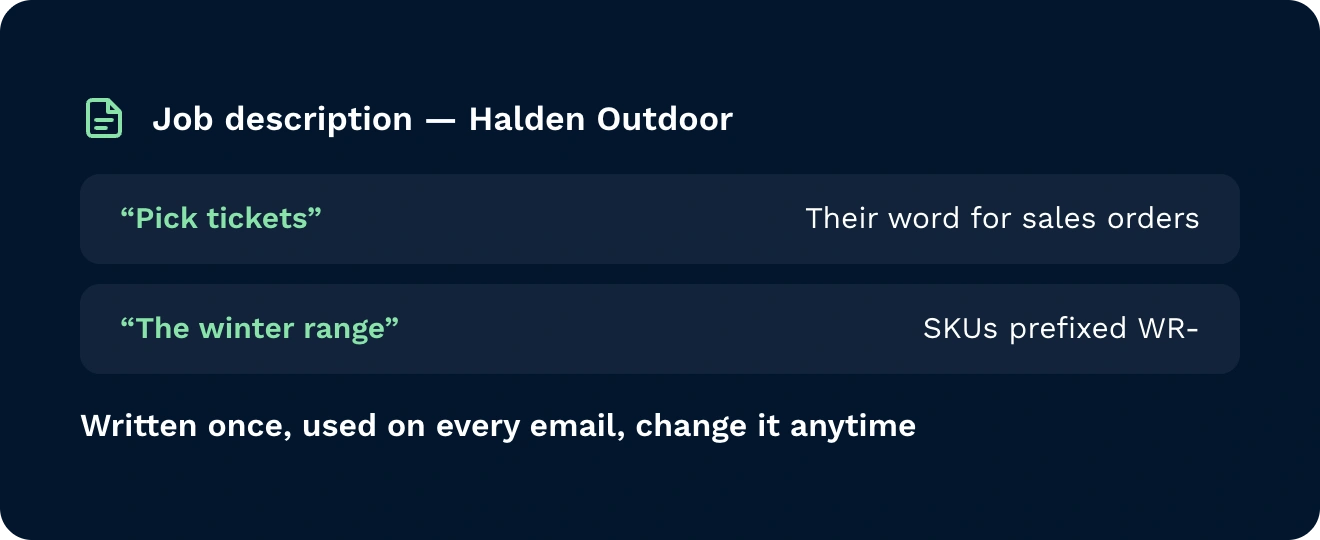
Write the agent’s job description once. Tell it what “pick tickets” or “the winter range” means for that customer, and it uses that context every time they email. Change it whenever you like.
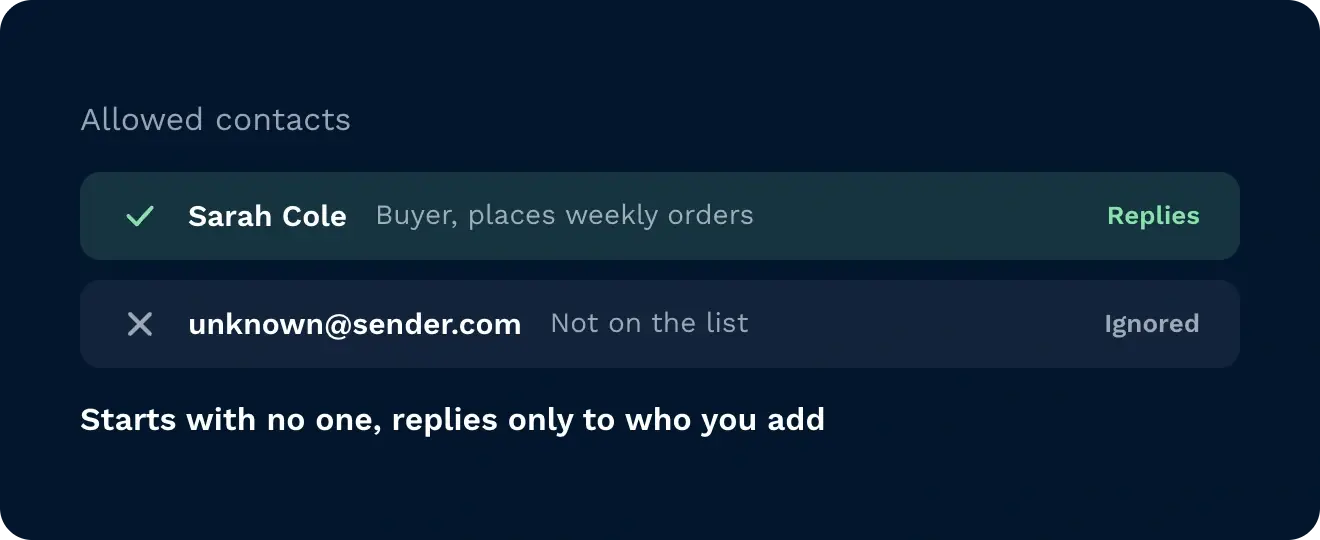
The agent starts with no allowed contacts and won’t reply to anyone who isn’t on the list. Add each contact with a name and a note about who they are, so it knows how to treat them.
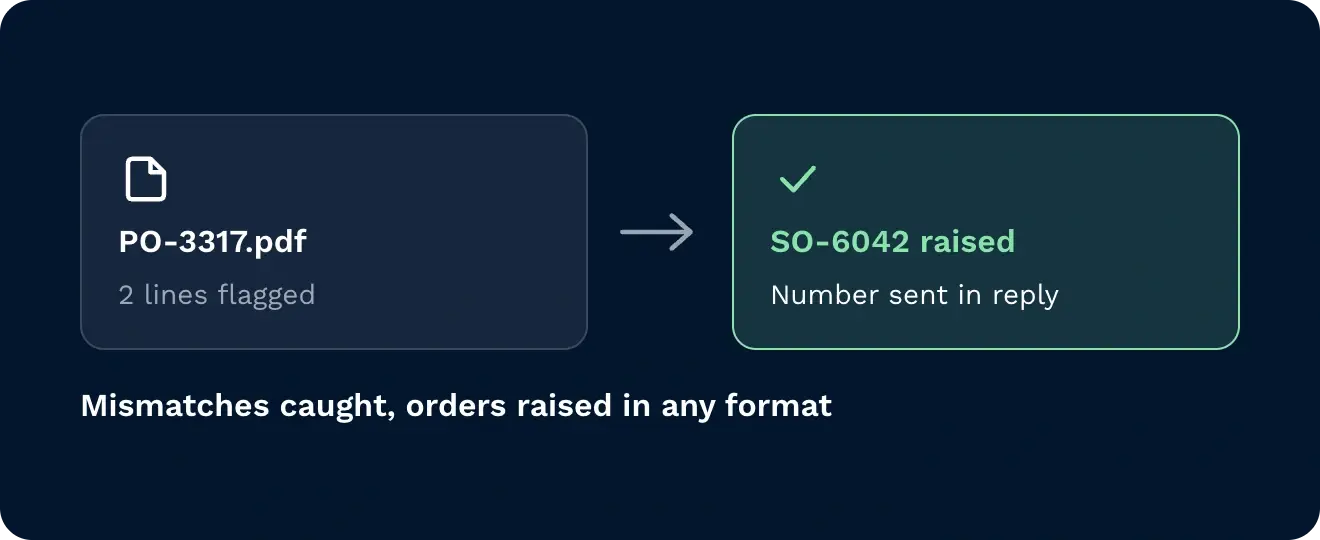
Attach a purchase order and ask what doesn’t line up. The agent compares it with the order and flags missing lines and quantity mismatches. Send an order in a customer’s own format and it can raise the sales order and reply with the number.
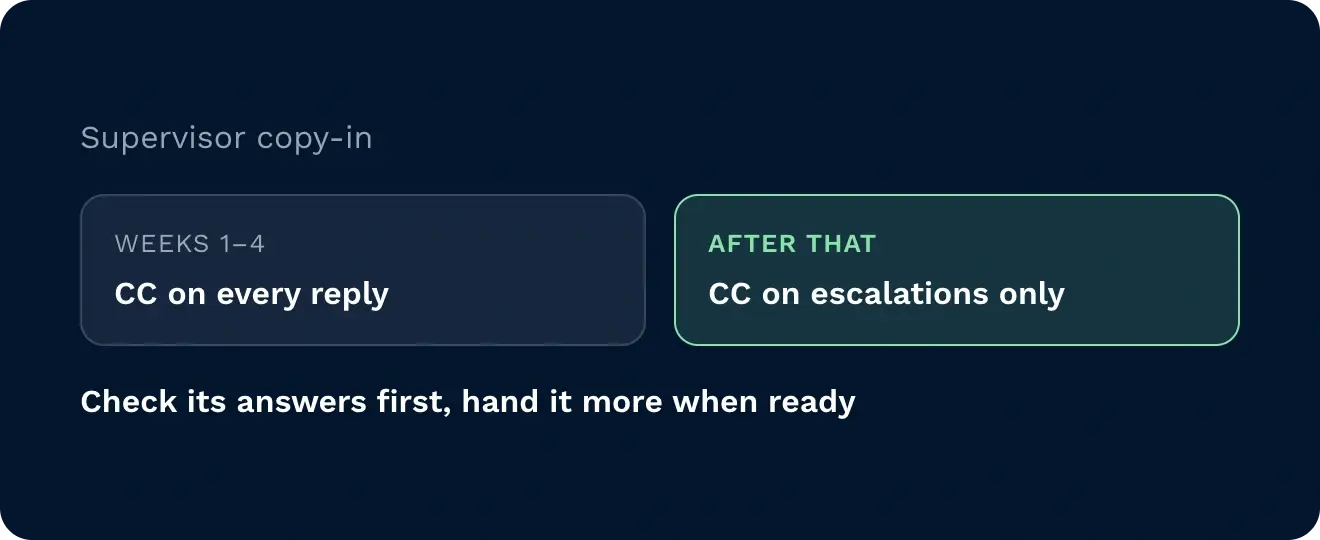
Set escalation instructions and the agent copies your supervisor in when it should. Copy them on every reply for the first few weeks so you can check its answers before you hand it more.
Your customers don’t want to chase. Set up an agent, tell it how each customer talks, and give it an inbox on your onclarus.com address. Ask how many cases of a range are at a site and it replies with each SKU, cases available and cases on hold. Ask about an order and an intake in the same email and it answers both, with links straight to the records. Send it a PO and it tells you where it doesn’t match the order.

Stop spending the day turning customer emails into lookups. The agent answers stock and order questions from approved contacts, and escalates the ones you’ve told it not to handle.

Give each customer an agent that knows their terminology. Their buyers get answers with direct links to the orders and bookings, in the units they use.

Forward a customer PO or portal order to the agent. It checks it against Clarus or raises the sales order, and flags anything that needs attention, like zero available stock.
You choose the inbox name and it sits on your Clarus subdomain, for example brian@yourcompany.onclarus.com. You also set the display name and signature.
No. It starts with no allowed contacts and only replies to the people you add. Each contact can have a name and notes that tell the agent who they are.
Through the agent’s job description. Add the customer’s terminology, such as what they call a product range or a warehouse, and the agent uses it as context when it replies.
Yes. In the demo it read a PDF purchase order and compared it with the order in Clarus, and read a customer’s portal order and raised a sales order from it.
Yes. It answers each question in the email and keeps the thread’s context, so follow-up questions work too.
Add a supervisor and escalation instructions. The agent copies the supervisor in when needed, and you can choose to copy them on every reply.
Yes. Email agents run on the AI credits included in your Clarus AI tier.
¿Todavía indeciso? Dedica cuatro minutos a ver cómo Clarus se encarga de mercancías?en, recogida y expedición. Ya verás por qué Nuestros clientes siguen diciendo ”sí” a nuevos contratos.